A new hire joins your oil team, eager to learn but unaware of how power or petrochemical trends shape the bigger picture. A seasoned professional leads a project but lacks insight into LNG’s broader market impact.
Online Industry Fundamentals Training is the only cross-industry
solution for energy majors, trading houses and government agencies, equipping every learner—from
entry-level to heads of function — with the knowledge to connect oil, gas, power, and emerging sectors.

Upstream
Build a solid foundation in the upstream oil and gas industry, from exploration and production to asset development, economics, and valuation, while learning how to assess asset value, investment opportunities, and risk.
This masterclass explains exploration risk, volumetric uncertainty, reserves estimation, and the full upstream lifecycle—from strategy and appraisal to production and decommissioning. Learners will build the knowledge to interpret geological and volumetric information, evaluate assets, and navigate evolving industry trends, investment patterns, demand, and future production challenges.

Tom Wooltorton
Associate Director
Upstream Research
S&P Global Energy
This session covers the art of valuing upstream assets while considering the hydrocarbon reserves, production profiles, and capital and operating expenditures. Ideal for energy professionals trying to understand investment and divestment opportunities in this volatile environment, with scenarios, sensitivities, and key metrics.

Jac Parsons
Senior Research
Analyst
S&P Global Energy
Oil Markets
Build a solid foundation in how the oil value chain works, from crude supply and upstream economics to pricing, trading, risk, and refining fundamentals. You’ll learn the key market drivers that shape value and the analytical thinking used to interpret movements across the system.
This session provides an overview of oil and the forces shaping the oil and energy markets today. Gain valuable insights into the history of the oil market, the dynamics of oil demand and supply, and the geopolitical factors at play.

Ha
Nguyen
Executive
Director
Global Head Long-Term Oil &
Fuels
S&P Global Energy
A guide through the intricate mechanics of trading physical crude. This session offers insights into the daily assessment and determination of pricing benchmarks that influence global crude trade, with a particular focus on Dated Brent.

Lucy Brown
Strategic Engagement &
Intelligence Lead
Oil & Generating Fuels
S&P Global Energy
This session covers essential risk management concepts, explores basic futures and options, and helps to understand basis trading and hedging strategies.

Claire Goddard
Senior
Director
Middle East and Africa
Analytics
S&P Global Energy
This session explores refining fundamentals, including technical configurations, operational efficiencies, and economic drivers. It covers margin optimization strategies and how technical setups influence profitability.

Debnil Chowdhury
Vice President
Americas
Head of Refining and
Marketing
S&P Global Energy
Transportation Fuels
Build insight into how transportation-related energy and commodity markets function, from shipping freight dynamics and bunkering to maritime alternative fuels and aviation decarbonization frameworks. The journey links real-world operational constraints to how pricing, demand, and investment incentives develop.
The Shipping Masterclass provides an introduction to the global maritime freight markets, illustrating their importance in facilitating global trade. It will explain how freight is traded and the demand and supply drivers that impact freight rate levels. The variety of vessel types and trading strategies employed will be considered, alongside the impact of geopolitical developments and maritime regulations.

Peter Norfolk
Global Director of
Freight Pricing
S&P Global Energy
This masterclass provides a concise overview of the global marine bunker market, examining current fuel demand, market trends, and the regulatory pressures shaping its future. It explores the transition from conventional fuels such as LSFO and HSFO toward LNG, biofuels, methanol and ammonia, while also covering fleet outlook, efficiency technologies, and the infrastructure needed to support alternative marine fuels.

Krispen Atkinson
Maritime
Specialist
CERA Consulting
S&P
Global Energy
As the maritime industry is accelerating the adoption of alternative fuels, this course provides an overview of the evolving maritime fuel landscape. What are the alternatives—and what role can be expected for hydrogen and hydrogen derivatives

Fotios Katsoulas
Director, Tanker
Freight &
Alternative
Fuels
S&P Global Energy
This session will provide an overview of the current uses of hydrogen, the options to produce clean hydrogen and the S&P Global long-term outlook for supply and demand hydrogen.

Brian Murphy
Head of Hydrogen and
Low Carbon
Gas Research
S&P
Global Energy
The global ammonia industry is a major consumer of hydrogen. This 60-minute session will provide a deep dive into the Methanol and Ammonia industry, covering technologies, competitiveness and markets.

Olivier Maronneaud
Global
Lead
Methanol & Plastic
Circularity
S&P Global Energy
Biofuels and e-fuels derived from green hydrogen both have a role to play in decarbonizing liquid supply. This session provides an overview of the global biofuels industry, a critical sector in the transition to a low-carbon economy.

Christoph Berg
Executive
Director
Head of Biofuels
Analytics
S&P Global Energy
Petrochemicals Markets
Get grounded in how the petrochemical industry is structured and what drives performance, margins, and product demand—especially for polyethylene. You’ll connect industry fundamentals to how traders and businesses think in spreads, supply constraints, and market timing.
This course addresses industry profitability fundamentals, including chemical structures and properties, process technologies, cost of production methodologies, key producers, end-use applications, market sizes, and trade patterns across the petrochemical value chains.

Jeff Plotkin,PhD.
VP, Chemical
Training
S&P Global Energy
This class provides a practical introduction to the polyethylene business, explaining why polyethylene is the world’s largest-volume plastic and the leading derivative of ethylene, one of the petrochemical industry’s core building blocks.
Jeff Plotkin,PhD.
VP, Chemical
Training
S&P Global Energy
This session explores essential concepts, including optimization along the value chain, pricing strategies, and the distinction between marketing and trading. Gain insights into commercial risk elements and effective hedging strategies to enhance your trading expertise.

Garrie Li
Chemical
Insights
APAC Lead
S&P Global
Energy
This introductory masterclass provides an overview of the feedstocks, intermediates, technologies and end-user markets that shape the Polyester/PET value chain.
Jeff Plotkin,PhD.
VP, Chemical
Training
S&P Global Energy
Gas Markets
Understand the mechanics of global gas markets with a focus on LNG and the surrounding NGL/LPG landscape. This journey ties together supply-demand fundamentals, contract and pricing logic, and the practical considerations that influence optimization and market outcomes.
LNG Demand-supply dynamics are undergoing seismic changes in major markets - Asia, Europe and Americas. This course equips learners with a fundamental understanding of how the global LNG markets are structured.

James Taverner
Research and
Analysis Director
Gas Power & Climate
Solutions
S&P Global Energy
Explains how LNG deals moved from older long-term FOB/DES contracts to today’s more flexible portfolio and spot trading. You’ll learn what destination clauses are, how they changed over time, and why they affect where gas can be delivered.

Sid Chauhan
Director
Global Gas
& LNG Consulting
S&P Global
Energy
This masterclass provides an in-depth study of the global markets and infrastructure for natural gas liquids (NGLs, including LPG), focusing on why the markets are structured.

Darryl Rogers
Vice
President
Midstream Oil &
NGL
S&P Global Energy
Power Markets
Learn how power markets operate and why outcomes can differ significantly from other commodities, given reliability, grid constraints, and data-driven operations. You’ll also develop a baseline understanding of how nuclear fuel fits into generation economics.
The global power market is expected to grow significantly, driven by new demands from data centers and AI, as well as electrification, electric vehicles (EVs), and industrialization. At the same time, the sustainability and reliability of the power supply need closer scrutiny. This comprehensive masterclass delves into the evolving power market dynamics.

Douglas Giuffre
Senior
Director
North American Power Markets
Analysis
S&P Global Energy
An overview of the fast-paced world of power trading and hedging. We will explore how power is generated, priced, and traded across wholesale markets, and examine the external factors—such as renewables, weather patterns, and grid balancing—that influence trading strategies.
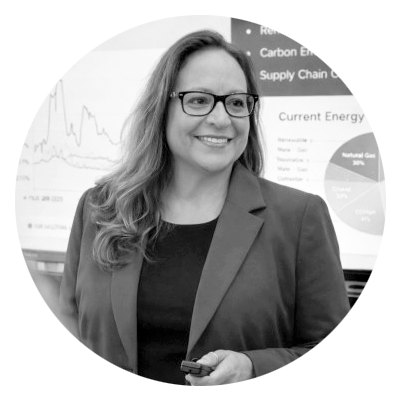
Amy Gasca
Senior
Director
Business Development
S&P
Global Energy
This session explores the intricacies of the global nuclear fleet, operating performance, and innovative technologies. Delve into policies, geopolitics, and the latest advancements in fuel development and waste management. Gain insights into the evolving landscape of nuclear energy and its future potential.

William Freebairn
Associate
Editorial Director
S&P Global Energy
This session explore how renewables interact with wider power systems and how markets are evolving to accommodate them.

Glenn Rickson
Head of European
Power Analysis
S&P Global Energy
Energy Transition
Explore the market foundations behind the shift toward lower-carbon energy systems, spanning renewables, power systems integration, solar and wind technology basics, and emerging carbon-related markets. You’ll also cover how carbon capture, utilization, and storage (CCUS) and metals dynamics relate to the broader transition.
What is the current market landscape for solar PV and how is it expected to develop? This session explores the history and fundamentals of solar PV, diverse applications, and system configurations.

Eric Wright
Senior
Analyst
Clean Energy
Technology
S&P Global Energy
What is the current market landscape for wind and how is it expected to develop? This session explores the fundamentals of wind energy, the evolving turbine supply landscape, and trends in both onshore and offshore installations.

Indrayuth Mukherjee
Associate
Director
Clean Energy
Technology
S&P Global Energy
As a low-carbon fuel, clean hydrogen can capture value from carbon markets globally. This session provides an overview of the different types of carbon markets and how companies can capitalize on them.

Dana Agrotti
Low Carbon Markets
Analyst
S&P Global Energy
This session provides an overview of the status and potential role of Carbon Capture, Utilization, and Storage (CCUS) in the energy transition. Delve into market conditions, global policies, the CCUS value chain, project pipelines, cost analyses, and long-term outlooks for CO2 capture installations.

Yufei Li
Senior Research
Analyst
Carbon management/CCUS
S&P
Global Energy
Critical Minerals & Metals
Build a foundational understanding of metals markets, including the main metal types, how metals are priced, and the factors that influence their value from producer to end user.
Build your understanding of the global metals industry, covering market fundamentals, pricing, supply and demand dynamics, trade flows, and the factors shaping aluminum, copper, lithium, and other key metals markets.

Jason
Kaplan
Director
Nonferrous
Metals Analysis
S&P Global Energy
Understand what makes minerals critical and what this means for procurement. Explore how governments define criticality, how it influences policy and investment, where supply-chain vulnerabilities emerge, and how national priorities can differ from your company’s operational exposure.
Jason
Kaplan
Director
Nonferrous
Metals Analysis
S&P Global Energy
Finance
Strengthen your ability to interpret financial information that underpins energy and sustainability decisions. You’ll connect financial statements and ratio analysis to how sustainable finance principles and sustainability data influence capital allocation and risk assessment.
This session explores how tariffs and protectionist policies shape energy supply chains. This session covers trade history, U.S. policy drivers, and the complex mechanics of duties. Understand impacts on sourcing, costs in oil and gas, and distortions in renewables—where critical minerals mark the latest battleground.

Chris Rogers
Head of Supply Chain
Research
S&P Global Market
Intelligence
Learn to interpret balance sheets, evaluate income statements, and apply key ratios to assess profitability of energy entities. Ideal for non-finance professionals looking to grasp cash flow statements and financial stability, liquidity, and efficiency of oil and gas companies.

Rafael Castro, CFA
Credit Product
Specialist
S&P Global Market
Intelligence
This session shows how oil companies can meet emerging sustainability standards, tap green capital and satisfy ESG focused investors.

Michael Taschner
Global Head of
Sustainability Services
S&P Global
Sustainable1
.
From field to boardroom, deliver impact with flexible,
expert-led energy training.
Request a demo to see the curriculum in action and explore the right learning path for your
team.
This session will provide an overview of the current uses of hydrogen, the options to produce clean hydrogen and the S&P Global long-term outlook for supply and demand hydrogen.
Status of the Global Hydrogen Market
The Hydrogen Value Chain
Long-Term Global Outlook for Hydrogen
Masterclass delivered by Senior Hydrogen Analyst, Brian Murphy.

This session is available to members of the World Hydrogen Leaders Community - Our online training subscription product
Already a subscriber? Click here to RSVP
Renewable electricity is a critical input to the green hydrogen production. This session provides an overview of the increased investment in renewable energy technologies, that is causing new challenges and opportunities for market players.
Factors to take into consideration when investing in renewable electricity
Competitiveness; Grid accommodation
Consumers: driving renewable investment
Masterclass delivered by Senior Director, North American Power Markets Analysis, Douglas Giuffre.

This session is available to members of the World Hydrogen Leaders Community - Our online training subscription product
Already a subscriber? Click here to RSVP
As a low-carbon fuel, clean hydrogen can capture value from carbon markets globally. This session provides an overview of the different types of carbon markets and how companies can capitalize on them.
Carbon Market Fundamentals:
Opportunities for Industry
Masterclass delivered by Low Carbon Markets Analyst, Dana Agrotti.

This session is available to members of the World Hydrogen Leaders Community - Our online training subscription product
Already a subscriber? Click here to RSVP
Solar PV will be a critical source of renewable power supply for green hydrogen. What is the current market landscape for solar PV and how is it expected to develop?
Masterclass delivered by Senior Analyst, Clean Energy Technology, Eric Wright.

This session is available to members of the World Hydrogen Leaders Community - Our online training subscription product
Already a subscriber? Click here to RSVP
What is low-carbon hydrogen worth? – A review of S&P Global view of hydrogen contracts
Masterclass delivered by Managing Editor, Hydrogen Markets, Nick Edstrom.

This session is available to members of the World Hydrogen Leaders Community - Our online training subscription product
Already a subscriber? Click here to RSVP
As the maritime industry is accelerating the adoption of alternative fuels, this course provides an overview of the evolving maritime fuel landscape. What are the alternatives—and what role can be expected for hydrogen and hydrogen derivatives
Status of Alternative Fuels for Maritime
The Alternative Maritime Fuels Value Chain
Long-Term Global Outlook for Maritime Fuels
Masterclass delivered by Director, Tanker Freight & Alternative Fuels, Fotios Katsoulas.

This session is available to members of the World Hydrogen Leaders Community - Our online training subscription product
Already a subscriber? Click here to RSVP
The refining industry plays a pivotal role as both a major producer and consumer of hydrogen. This session will explore how this sector is adapting to evolving hydrogen production and consumption trends as part of its energy transition strategy.
Refineries are increasingly focusing on hydrogen as a key component in the energy transition
Masterclass delivered by Associate Director, Refinery Operations & Economics, Rasool Barouni.

This session is available to members of the World Hydrogen Leaders Community - Our online training subscription product
Already a subscriber? Click here to RSVP
CCUS is both a competitor for clean hydrogen and when applied to natural gas reforming a source of clean hydrogen supply. In this session we will provide an overview of CCUS, from cost analysis and policies to opportunities and challenges ahead
Status of the CCUS Market
The CCUS Value Chain
Engineered carbon dioxide removal
Long-Term Global Outlook for CO2 capture installations
Masterclass delivered by Principal Research Analyst, Gas Power and Climate Solutions, Paola Perez.

This session is available to members of the World Hydrogen Leaders Community - Our online training subscription product
Already a subscriber? Click here to RSVP
Aviation is one of the most challenging sectors to decarbonize due to strong demand growth, limited technical solutions and a weak policy framework. The Carbon Offsetting and Reduction Scheme for International Aviation (CORSIA) is a carbon offset and carbon reduction scheme to designed to lower CO2 emissions for international flights and curb the aviation impact on climate change.
Masterclass delivered by Global Head of Carbon Pricing, Marie-Louise Du Bois.

This session is available to members of the World Hydrogen Leaders Community - Our online training subscription product
Already a subscriber? Click here to RSVP
Along with solar PV, wind energy underpins green hydrogen production. What is the current market landscape for wind and how is it expected to develop?
Status of the CCUS Market
Masterclass delivered by Associate Director, Clean Energy Technology, Indrayuth Mukherjee.

This session is available to members of the World Hydrogen Leaders Community - Our online training subscription product
Already a subscriber? Click here to RSVP
As a low-carbon fuel, clean hydrogen can capture value from carbon markets globally. This session provides an overview of the different types of carbon markets and how companies can capitalize on them.
Overview of the methanol and ammonia market:
Masterclass delivered by Global Lead – Methanol & Plastic Circularity, Olivier Maronneaud.

This session is available to members of the World Hydrogen Leaders Community - Our online training subscription product
Already a subscriber? Click here to RSVP
Biofuels and e-fuels derived from green hydrogen both have a role to play in decarbonizing liquid supply. This session provides an overview of the global biofuels industry, a critical sector in the transition to a low-carbon economy.
Status of the Global Biofuels Market
The Biofuels Value Chain
Long-Term Global Outlook for Biofuels
Masterclass delivered by Sr. Principal Research Analyst, Ina Chirita.

This session is available to members of the World Hydrogen Leaders Community - Our online training subscription product
Already a subscriber? Click here to RSVP